Visual Story Writing: From Inception to Production
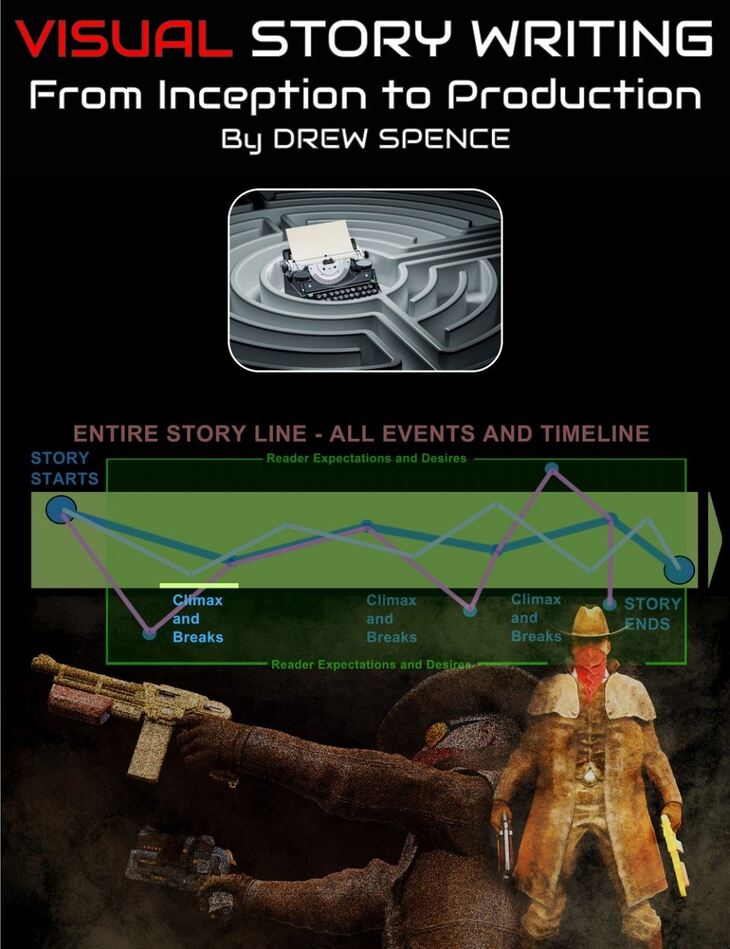
Digital Art Live Griffin Avid released Visual Story Writing: From Inception to Production on Daz 3D. The download holds 56 items, among them Visual Story Writing : From Inception to Production: (.MP4) Session 1 : 1 hour and 42 minutes 00:02 – Give out details. Get your audience to believe, 00:05 Starting at the imitation level – copying and homage., 00:10 Artistry : Innovation (Leader) and Elevation (experimentation).
Drew Spence, comic creator shares his experience on story writing for your 3D art using Daz Studio. This two part tutorial set runs for 3 hours and 24 minutes in total. Every road trip requires a map to prevent the driver getting lost along the way. Similarly the crafting of any well told story for a visual narrative is potentially a long road trip! On the way you may find some diverting stops and detours. You might even change your mind about the final destination. But if you are wandering aimlessly without a plan, your passengers (or readers) will eventually get tired, hungry and grumpy. They’ll think again before going on a road trip with you. Without a proper map there is no answer to the question, “Are we there yet?” High quality stories tell you plainly when you have arrived at the destination. Don’t leave your passengers guessing about whether you’re getting close. Stories have deliverable payoff points- just like like the signs along a highway counting down the miles until you’ve reached your destination. They give you a sense of scale and a growing anticipation that the end is nearing. Part I Creating Your Story from Inception to Production (tutorial 1) Part II Caring for your story (tutorial 2) Part III Closing out your story, taking breaks and exit points. (tutorial 2) About the Presenter : Drew Spence
What’s included
- Visual Story Writing : From Inception to Production: (.MP4) Session 1 : 1 hour and 42 minutes 00:02 – Give out details. Get your audience to believe
- 00:05 Starting at the imitation level – copying and homage.
- 00:10 Artistry : Innovation (Leader) and Elevation (experimentation)
- 00:10 Your own beliefs are the basis of story telling; but you don’t have to tell everyone. Your big idea.
- 00:13 Don’t forget the big idea. Don’t stretch the big idea for ever.
- 00:15 You should know the ending of the story.
- 00:16 The World Start (the universe)
- 00:17 Pay off events – defined
- 00:27 The elevator pitch
- 00:30 Get your ideas out. Do something small to start with. A saga isn’t a great way to start.
- 00:33 Choices of what to show
- 00:35 What you talk about other than your writing may give you a key to your beliefs/ What are you moved about?
- 00:37 Knowing the ending may define the beginning
- 00:38 Separate the delivery medium from the production process.
- 00:45 Learning from your mistakes. Not delivering a payoff.
- 00:51 Flashbacks
- 00:58 “Left turns” or origin stories
- 01:04 Considering the whole story line
- 01:10 Pacing along the story line
- 01:15 Jump to step 3 – Innovation
- 01:23 Mistake of using an “information dump” on the reader.
- 01:31 Characters having a beginning and an end for their development
- 01:36 World building. What to build first?
- 01:41 Working with a team
- Session 2 : 1 hour and 41 minutes 00:05 – Priest – People Reading in Early Stages (trusted).
- 00:10 – “Coils of the medusa” comic – the “flip test”
- 00:13 – Do they get the gist of the story?
- 00:17 – See the timing of the visual story based
- 00:20 – Change the art direction/story structure according to the feedback of the Priests
- 00:23 – Pace of a visual story – amount of text in the panels.
- 00:26 – The magic of storytelling
- 00:28 – Mileposts in story- payoff points
- 00:29 – Avoid tangents in stories. Stay in the boundaries of your story.
- 00:30 – Superfans
- 00:31 – A visual narrative story can have layers, allowing the reader to pick up more on subsequent readers.
- 00:33 – On the deepest level, the vision or the author’s fingerprints are seen.
- 00:36 – Guidlines for priests
- 00:42 – Challenge: avoid meandering through your story
- 00:44 – Dead ends
- 00:45 – Read the story from back to the beginning
- 00:46 – Ramping up to a milepost in the story or ramping down from it. What’s the angle of the ramp? Too steep/shallow.
- 00:47 – “There is no such thing as writer’s block”.
- 00:49 – Technical skill and discipline can take over when being out of the zone
- 00:51 – Create a buffer, don’t wait to be in the zone.
- 00:54 – Mistakes in writing; time jumps
- 00:57 – Use all three levels to check a story.
- 00:58 – From Christine : For me the ramping up and down is connected to telling enough versus being subtle. I constantly struggle with whether something is too obvious or only obvious to me.
- 00:59 – Negative space in a visual story
- 01:06 – Using a connective and stylistic theme through the story.
- 01:11 – Character development. Events echo and repeat themselves – create a rhythm.
- 01:17 – Tying up -moving to the closure of the story.
- 01:18 – Ramping up to the ending.
- 01:22 – Show props for a reason in the story
- 01:23 – Leave the story on a high point for a hiatus.
- 01:25 – Fulfil expectations for the readers
- 01:28 – The greatest writing changes the reader or their belief system of the world.
Specifications
- Source: Daz 3D
- Software / install: DIM Manual Install
- SKU: 65813
- Artist: Digital Art Live Griffin Avid
Download links for 3 mirrors are listed below.